
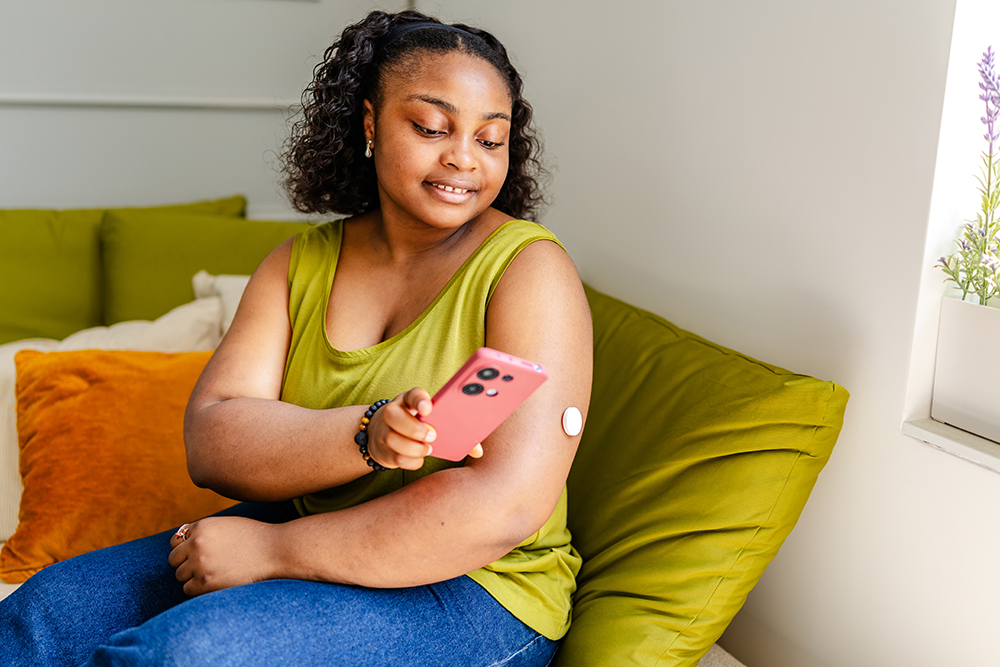
Making the most from a short-term CGM trials in type 2 diabetes
Continuous glucose monitoring (CGM) is increasingly being used by people with type 2 diabetes, either through clinician recommendation or direct-to-consumer trial programs. While much of the evidence and funding focus has historically centred on type 1 diabetes, short-term CGM use has emerged as a valuable educational tool for people with type 2 diabetes.
A CGM trial can provide users with real-time feedback on the impact of food choices, physical activity, medication timing, sleep, and stress on glucose levels. For many individuals, visualising glycaemic responses can improve understanding of diabetes management and support more meaningful behaviour change than traditional glucose monitoring alone.
Maximising the value of a CGM trial
People often derive the greatest benefit when a CGM trial is linked to specific questions or management objective.
Examples include:
- Identifying meals associated with significant postprandial hyperglycaemia
- Assessing the glycaemic impact of physical activity
- Exploring fasting or overnight glucose patterns
- Evaluating medication effectiveness and timing
- Understanding the effects of stress, illness or poor sleep on glucose levels
Encouraging a client to focus on one or two goals helps prevent information overload and facilitates more targeted learning.
Encourage contextual data collection
CGM data are significantly more useful when interpreted alongside information about daily activities.
A simple diary recording:
- Meals and snacks
- Physical activity
- Medication administration
- Sleep patterns
- Acute illness
- Significant stressors
can help explain observed glucose excursions and facilitate productive clinical discussions.
Three areas worth reviewing
Postprandial responses
Short-term CGM can help patients visualise how meal composition, carbohydrate quality, and portion size influence glucose levels.
Useful questions include:
- How high does glucose rise following meals?
- How long does it remain elevated?
- Are particular foods associated with larger excursions?
- Does meal sequencing influence glucose responses?
Many people are surprised by the degree of variability following meals and may become more engaged in dietary changes after seeing their own data.
Physical activity
CGM can also demonstrate the glucose-lowering effects of physical activity.
It is useful to use the trial period to explore:
- Differences between aerobic and resistance exercise
- Effects of exercise intensity
- The impact of post-meal walking
- Glycaemic responses to everyday activities
These insights can help you develop more personalised exercise recommendations with your client.
Overnight glucose
The overnight period often reveals patterns that would otherwise go undetected.
CGM may identify:
- Stable overnight glucose profiles
- Early morning glucose elevations
- Effects of evening meals or snacks
- Nocturnal hypoglycaemia in people using insulin or sulfonylureas
These observations may help guide medication review and ongoing management decisions.
Practical experiments
One effective strategy during a CGM trial is encouraging clients to make a single change and observe the result.
Examples include:
- Comparing two breakfast options
- Replacing refined carbohydrates with lower-GI alternatives
- Introducing a 10-15 minute post-meal walk
- Increasing vegetable intake before carbohydrate-rich foods
The immediate feedback provided by CGM can be extremely helpful for the user.
Focus on trends
A common challenge is helping clients avoid becoming overly focused on individual glucose values.
Instead, clinicians should direct attention towards:
- Time in range
- Glycaemic variability
- Recurrent periods of hyperglycaemia
- Frequency of hypoglycaemia
- Consistent daily patterns
For many adults with type 2 diabetes, commonly cited CGM targets include:
- Time in range (3.9-10.0 mmol/L): >70%
- Time above range: <25%
- Time below range: <4%
The emphasis should remain on identifying trends and opportunities for improvement rather than achieving “perfect” glucose readings.
Understanding CGM accuracy limitations
As CGM use expands, it is increasingly important that people understand the limitations of the technology.
CGM systems measure glucose in interstitial fluid rather than directly in capillary blood. Due to physiological lag time between blood and interstitial glucose, sensor readings may differ from fingerprick results, particularly during periods of rapid glucose change such as:
- Following meals
- During and after exercise
- During hypoglycaemia treatment
- Following insulin administration
Clients should also be aware that readings can be affected by:
- Compression of the sensor during sleep
- Dehydration
- Sensor placement issues
- Sensor warm-up periods
- Normal device variability
For this reason, CGM should be viewed as a tool for identifying patterns and trends rather than as a perfectly precise measurement of blood glucose at all times.
When confirmation with fingerprick testing is required
Despite advances in CGM accuracy, fingerprick blood glucose testing remains necessary in some circumstances.
You should advise clients to confirm glucose levels when:
- Symptoms do not match the CGM reading
- Hypoglycaemia is suspected
- Readings appear clinically implausible
- Glucose levels are changing rapidly
- During sensor warm-up periods
- Before making critical treatment decisions
- Prior to driving or operating machinery where required
This is particularly important for clients using insulin or medications associated with hypoglycaemia.
Additional considerations
Clinicians should also discuss common usability challenges.
Some patients experience:
- Sensor adhesion difficulties, particularly during exercise or swimming
- Alarm fatigue from frequent alerts
- Anxiety related to constant glucose visibility
Addressing these issues early can improve the overall trial experience. In some cases, adjustment of alert settings or use of sensor patches may improve usability.
By Donna Itzstein, Pharmacist and Credentialled Diabetes Educator